
Why Rotator Cuff Injuries Matter
Rotator cuff injuries are among the most common shoulder issues we treat at St. Vital Physiotherapy & Sports Injury Centre. As people return to fall sports, gym routines, and overhead activities, shoulder strain becomes more frequent — and early physiotherapy can make all the difference.
What Exactly Is the Rotator Cuff?
The rotator cuff is a group of four muscles that stabilize your shoulder and help you lift, rotate, and control your arm. When these muscles or their tendons become irritated or injured, everyday movements can suddenly feel painful or restricted.
Common Causes of Rotator Cuff Injuries
- Overuse from repetitive overhead movements
- Sudden heavy lifting
- Age-related tendon changes
- Poor posture that compresses shoulder structures
- Weakness in the shoulder blade stabilizers
September is a high-risk month because activity levels often increase quickly after a slower summer pace.
Signs You May Have a Rotator Cuff Problem
- Pain when lifting or reaching overhead
- Difficulty sleeping on the affected shoulder
- Weakness when carrying objects
- Clicking or catching sensations
- Pain during sports like volleyball, swimming, baseball, or weightlifting
If symptoms persist for more than a week, a physiotherapy assessment is recommended.
How Physiotherapy Helps
Early physiotherapy is one of the most effective ways to prevent small shoulder issues from becoming long-term injuries.
Treatment focuses on:
Treatment focuses on:
- Restoring proper shoulder mechanics
- Reducing pain and inflammation
- Strengthening the rotator cuff and scapular muscles
- Improving posture to reduce tendon compression
- Educating you on safe movement and prevention
Most Common Rotator Cuff Injuries We See
- Tendinopathy
- Partial tears
- Impingement syndrome
- Bursitis
Each responds well to targeted physiotherapy when addressed early.
Three Ways to Protect Your Rotator Cuff This Fall
- Scapular strengthening to support shoulder stability
- Shoulder mobility work to reduce stiffness
- Load management to avoid sudden spikes in overhead activity
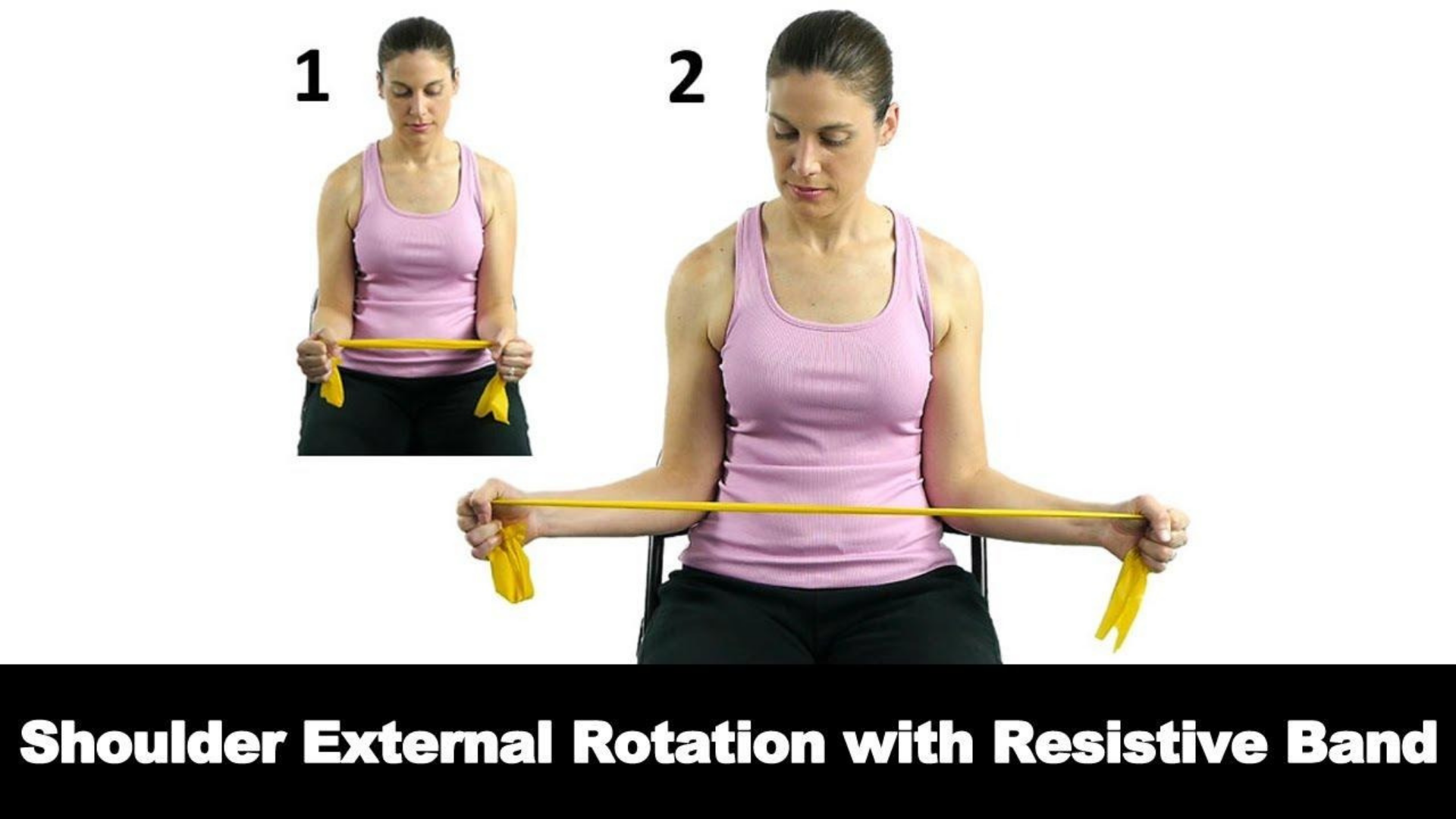
Exercise of the Month: Bilateral Shoulder External Rotation with Band
Why This Exercise?
This exercise strengthens both sides of the rotator cuff at once — especially the infraspinatus and teres minor — while also improving posture and shoulder stability. It’s safe, accessible, and ideal for anyone returning to fall sports or overhead activity.
How To Do It
- Stand tall with a resistance band held in both hands.
- Keep elbows bent to 90 degrees and tucked gently against your sides.
- Start with your hands shoulder-width apart.
- Pull the band outward by rotating both forearms away from your body.
- Pause briefly, then return slowly to the starting position.
Reps: 2–3 sets of 12–15 Frequency: 3–4 times per week Focus: Keep shoulders relaxed, avoid shrugging, and move slowly.
Why It Works
This exercise:
- Strengthens the rotator cuff
- Encourages proper shoulder alignment
- Reduces impingement risk
- Supports safe return to overhead activity
- Improves bilateral coordination and stability
If pain increases, reduce band tension or shorten the range of motion.
Final Takeaway
Rotator cuff injuries are common — but highly treatable. Adding targeted exercises like Bilateral Shoulder External Rotation with Band to your routine can help protect your shoulders and keep you moving confidently all season long.
READY TO START?
Book Your Personalized
Treament Plan Today!
Don't let pain hold you back. Our team is ready to help
you move better and feel stronger.
you move better and feel stronger.

Expert physiotherapy care tailored to your recovery and
performance. Serving the St. Vital community in Winnipeg.