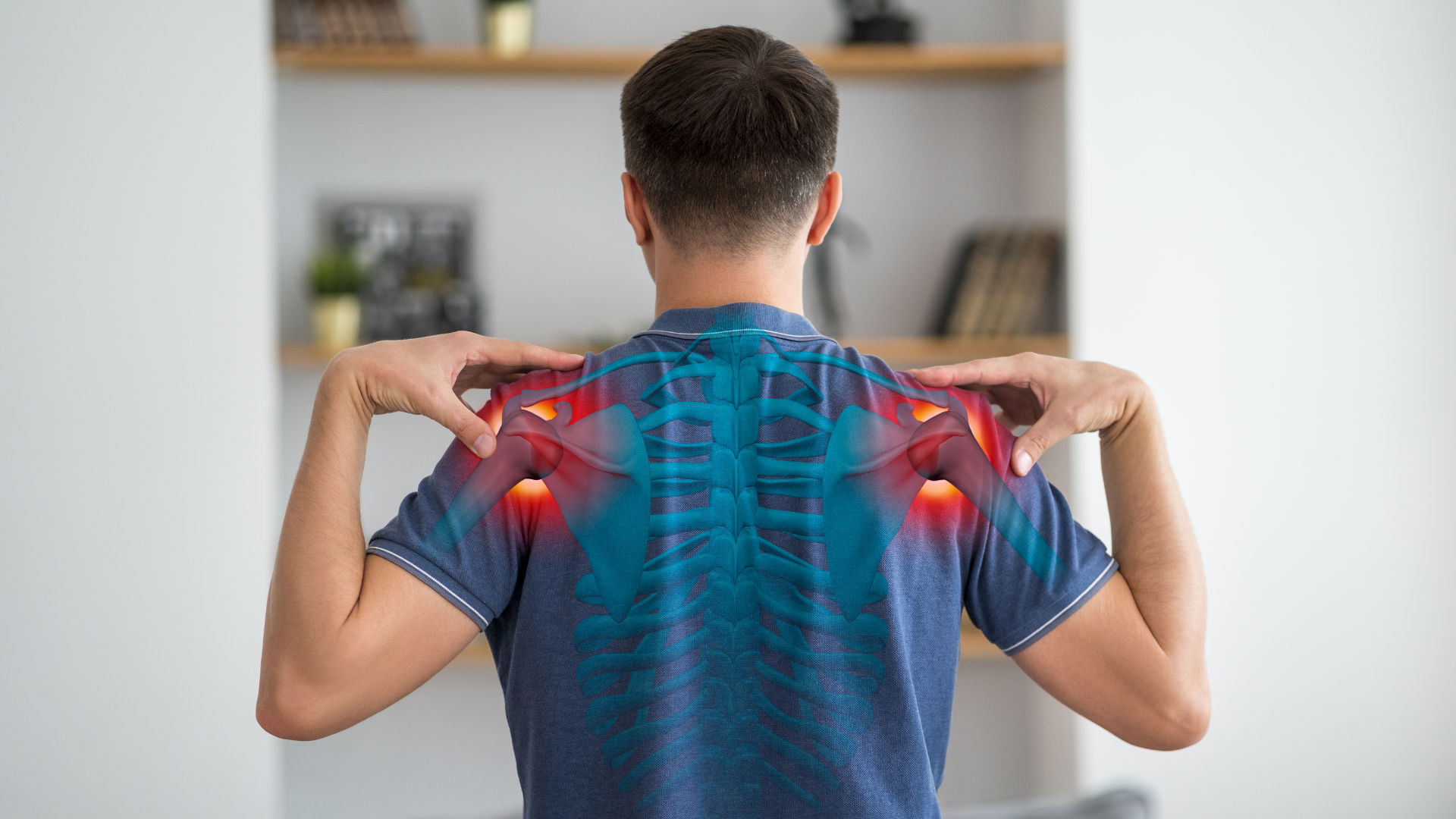
Why Scapular Stability Matters
If the rotator cuff is the engine of the shoulder, the scapula (shoulder blade) is the foundation it runs on. Without a stable, well-positioned scapula, the rotator cuff has to work harder, shoulder mechanics break down, and injury risk rises — especially during fall sports and overhead activities.
Scapular stability is one of the most overlooked components of shoulder health, yet it plays a central role in preventing pain, improving strength, and supporting long-term mobility.
Scapular stability is one of the most overlooked components of shoulder health, yet it plays a central role in preventing pain, improving strength, and supporting long-term mobility.
What Is Scapular Stability?
Scapular stability refers to how well the shoulder blade stays controlled and supported during movement. The scapula is held in place by a network of muscles - including the serratus anterior, trapezius, rhomboids, and levator scapulae - that work together to:
- Position the shoulder for efficient movement
- Reduce strain on the rotator cuff
- Maintain joint alignment
- Support overhead lifting, reaching, and sport-specific motions
When these muscles are weak or poorly coordinated, the shoulder becomes vulnerable to irritation, impingement, and overuse injuries.
Why Scapular Stability Is Essential for Rotator Cuff Health
This topic pairs perfectly with your early-September rotator cuff article because the two systems are inseparable. The rotator cuff cannot function properly without a stable base.
Weak scapular stabilizers can lead to:
Weak scapular stabilizers can lead to:
- Increased compression of rotator cuff tendons
- Poor overhead mechanics
- Shoulder “winging” or collapsing during movement
- Early fatigue during sport or exercise
- Higher risk of tendinopathy or impingement
Strengthening the scapula is one of the most effective ways to reduce rotator cuff pain and prevent future injury.
Common Signs of Scapular Instability
Patients often don’t realize their shoulder blade is the source of their pain. Typical signs include:
- Shoulder fatigue during simple tasks
- Pain during overhead movements
- Shoulder blade winging or tipping forward
- Clicking or catching sensations
- Difficulty maintaining posture
- Weakness during pushing or pulling exercises
These symptoms often appear in September as people return to sports, gym routines, and structured work schedules.
Who Is Most at Risk?
Scapular instability is especially common in:
- Volleyball, baseball, swimming, and hockey athletes
- Weightlifters and gym-goers
- Students carrying heavy backpacks
- Office workers with prolonged sitting
- Anyone recovering from a shoulder injury
This makes mid-September the ideal time to educate patients and reinforce preventive strategies.
How Physiotherapy Helps
A physiotherapist assesses scapular movement, muscle activation, posture, and strength to identify where the breakdown occurs. Treatment may include:
- Manual therapy to improve mobility
- Targeted strengthening of scapular stabilizers
- Postural retraining
- Movement correction during sport or exercise
- Rotator cuff integration to restore full shoulder function
Improving scapular stability often leads to rapid improvements in pain, strength, and overhead performance.
Reps: 2–3 sets of 12–15 Frequency: 3–4 times per week Focus: Keep shoulders relaxed and avoid shrugging.
How Physiotherapy Helps
1. Wall Slides (Serratus Activation)
Purpose: Strengthens serratus anterior and improves upward rotation of the scapula. How to do it:
- Stand with your forearms against a wall, elbows bent.
- Gently press your forearms into the wall to “set” your shoulder blades.
- Slide your arms upward while keeping light pressure into the wall.
- Avoid shrugging; keep the neck relaxed. Reps: 10–12 slow slides.
2. Prone Y/T/Ws (Mid-Back Stabilizers)
Purpose: Activates lower traps, middle traps, and rhomboids. How to do it:
- Lie face-down on a bed or mat with arms hanging off the sides.
- Lift your arms into a Y, then a T, then a W position, squeezing shoulder blades gently each time.
- Keep movements small and controlled; avoid arching your low back. Reps: 6–8 of each shape.
3. Banded Rows (Scapular Retraction)
Purpose: Reinforces posture and strengthens the muscles that pull the shoulder blades back. How to do it:
- Anchor a resistance band at chest height and hold the ends.
- Pull the band toward your ribs while gently squeezing your shoulder blades together.
- Keep shoulders down and avoid leaning back. Reps: 12–15 controlled pulls.
Final Takeaway
Scapular stability is the cornerstone of shoulder health. When the shoulder blade moves well, the rotator cuff can perform at its best — reducing pain, improving strength, and preventing injury. As fall routines ramp up, now is the perfect time to educate patients and reinforce the importance of strong, stable shoulders.
READY TO START?
Book Your Personalized
Treament Plan Today!
Don't let pain hold you back. Our team is ready to help
you move better and feel stronger.
you move better and feel stronger.

Expert physiotherapy care tailored to your recovery and
performance. Serving the St. Vital community in Winnipeg.